
How to Prepare for a Successful Teaching Observation or Appraisal
Understanding the Teaching Observation and Appraisal Process
- Observation: Zeros in on a particular lesson or teaching moment, usually with a set of criteria.
- Appraisal: Takes a step back and looks at how you’re doing overall - lesson prep, teamwork, professional development, all sorts.
- Feedback: Always crucial, and should give you useful next steps.
- Development: At the core, both should help you keep moving forward, not just check up on you.
Key Differences Between Observation and Appraisal in ELT Settings
Ever get those terms mixed up? You’re not alone - teachers do it all the time. But, there are actually some clear lines between an ‘observation’ and an ‘appraisal’. Getting your head around these can really help you prep properly, and make sense of feedback, too. Observations in ELT mostly focus on a single lesson. Usually the date is set (though I’ve seen a few surprise visits!), and the observer is looking for evidence that you’re bringing good practice into your teaching - things like clear planning, classroom control, and student involvement. When I was working in Warsaw, our observations linked tightly to certain criteria: lesson aims, use of material, student-to-student talk… That feedback came straight after, and it was always practical. Appraisals are a bit more of a bird’s eye view. They tend to pop up once or twice a year, and usually involve you reflecting on your progress, a one-to-one meeting, and setting some new professional targets. An appraisal might pull together several strands: previous observations, comments from learners, exam results, school projects, and anything you’ve done for your own CPD.| Aspect | Observation | Appraisal |
|---|---|---|
| Focus | Specific lesson or session | Overall performance, broader role |
| Frequency | Termly or as needed | Annually or biannually |
| Criteria | Lesson outcomes, teaching skills | Professional standards, development goals |
| Feedback | Immediate, lesson-focused | Holistic, includes development planning |
| Outcome | Targeted suggestions for classroom practice | Professional development plan |
Effective Lesson Planning for Observed Classes
- Clear lesson aims in language your learners get
- Logical lesson steps that help students reach those aims
- A mix of ways for students to interact, not just you talking
- Moments for feedback and checking that students are on track
- All the materials you’ll need - plus a Plan B (because, honestly, tech will let you down at least once)
- Any problems you expect, and what you’ll do about them - this shows you can think on your feet
Pro Tip: Tie your lesson plan to the criteria your school or organisation uses for observations. Not sure what those are? Ask at work, or check frameworks like our professional standards.
And differentiation - don’t ignore it. If your class has mixed abilities, jot down how you’ll tweak tasks or give alternative instructions. Observers pick up on this. But, more importantly, your learners get a much better experience.
Feeling stuck on the plan? Get a colleague to check it over. In my experience, someone else can spot that rogue activity or overly ambitious stage faster than you’d imagine.
Managing Classroom Performance and Student Engagement
Alright, your plan’s ready - but what about the reality? Standing up there with someone watching can turn even the steadiest teacher into a bundle of nerves. Here’s my advice: try to turn nervousness into positive energy. (Easier said than done, trust me. Once in Liverpool, I spent an entire observed lesson calling a student by my own name. Embarrassing.) During observations, classroom management gets a lot of attention. But you really don’t need to act like a strict enforcer. What observers want to see is a calm, respectful space where everyone knows how things work and students feel confident to join in. That comes down to routines, clear instructions, and giving a bit of gentle nudging when you need to. Student engagement matters just as much. Are your learners busy, getting stuck in, and speaking more than you? Are your tasks at the right difficulty, not too easy or hard? If your students are on task and enjoying themselves, you’re probably nailing it.- Use names, and reference personal stuff to build rapport
- Switch up tasks: pairwork, groupwork, solo work
- Keep instructions super clear - show, don’t just tell, where you can
- Keep an eye on the room but don’t hover
- Let students have the floor - step back and watch them shine
- If someone’s off task, deal with it calmly and predictably
Pro Tip: Practise moving between activities. If your transitions are smooth, your lesson keeps flowing - and observers really notice that.
If something goes off script (and let’s be real, it will sometimes), keep your cool. The best observers know classrooms can be unpredictable. What they really want to see? You adapting, not controlling every second.
Common Challenges During Observations and How to Overcome Them
Does anything ever go 100% right in an observed lesson? I doubt it! There’s always some curveball. The projector decides to nap, a normally shy student won’t stop talking, your timing goes haywire. I’ve even been interrupted by a fire drill in Prague - just as my students were about to reveal their group projects. We ended up finishing the lesson outside in the car park, discussing the work in pairs. Not perfect, but it showed a bit of adaptability. Some of the most common ‘gotchas’ and a few ways I’ve found to get past them:- Nerves: Try a quick breathing exercise before class, then put your focus on your students instead of the observer.
- Tech issues: Always have a backup set of tasks or printed handouts in your bag. Tech lets you down, usually on the big day.
- Behaviour problems: Stick to your usual approaches. Resist the urge to roll out brand new rules just for the observation.
- Time slipping away: Use a timer where you can see it. If you get behind, tweak your plan on the go - flexibility scores big points.
- Memory lapses: Have everything you need set out in advance. If you forget something, just laugh it off and carry on. We’re all human.
If there’s something you’re genuinely worried about - a tricky student, grammar point that’s always awkward, whatever - bring it up before your lesson. That way, your observer gets the context. They’ll be able to offer advice rather than just catching you out."Observations are a snapshot, not the whole picture. What matters is your ability to reflect and respond, not to achieve perfection in every minute."
- Dr. M. Carter, Brighton Language College
- Keep your teaching style the same - don’t change it just because it’s observation day
- Keep your energy on the students, not the person taking notes
- If anything goes wrong, be upfront about it in your feedback session
- Unexpected hiccups? Treat them as chances to show how flexible you can be
What Observers Look For: Insights from ELT Experts
Ever sat there and wondered, “What exactly are they writing down?” You wouldn’t be the first. From what I’ve seen, there’s a myth that observers want fancy tech tricks or something showy. But, in reality, the basics matter most. Almost every observation framework I’ve used focuses on three big areas: Are your aims clear? Are your learners actually learning something? And is the classroom atmosphere positive? I’ve sat in on observations in places as different as London and Kuala Lumpur, and these things are oddly universal:- Are your aims clear and suitable for this group?
- Does the lesson flow in a logical order?
- Are students joining in, or just spectators?
- Are you checking understanding, not just moving on?
- Is feedback useful and at the right time?
- Can we see you’re adapting to different needs in the class?
- Do you reflect on what worked (and what didn’t)?
One more thing: the research backs up what I’ve noticed myself. In a survey of accredited ELT centres, nearly 8 in 10 observers said they look for student interaction and participation first, then clarity of aims and good lesson structure. Tech? A bonus, but definitely not top of the list. Want to see how your school compares? Check their framework against the Propannex Council’s professional standards. There’s a lot of overlap. Also, I’ve found the most helpful observations give you space to say what you think went well, or what you’d tweak. Observers really appreciate teachers who are open and reflective."It’s not about perfection; it’s about purposeful teaching. We’re looking for evidence that the teacher knows their learners and can adapt in real time."
- A. Tindall, ELT Inspector and Council Assessor
Reflecting on Feedback and Setting Professional Goals
The lesson’s done, the observer’s left, and now it’s time for feedback. Sometimes that’s the bit that feels most intimidating. But honestly, this is where the real progress happens. The best feedback I’ve had was always honest, specific, and pushed me to look forward. Back when I was in Leeds, a senior colleague told me, “Don’t just focus on mistakes - spot what you did well, and grow it.” That’s stuck with me, and I try to pass it on to new teachers too. When you’re getting feedback, listen closely. Jot down notes. Ask questions if anything’s not clear - not to argue, but to really understand how you can move forward. And if something hits you sideways, give it a day or so before you react. Trust me, sometimes the advice makes more sense with a bit of distance.Here’s how to actually use that feedback:"Constructive feedback isn’t criticism; it’s an invitation to develop. The best teachers see every observation as a springboard, not a verdict."
- S. Patel, Senior Trainer, Propannex Council
- Pick out two strengths you want to build on
- Find one clear area to improve - be honest with yourself
- Set a SMART goal (specific, measurable, achievable, relevant, time-bound) related to that
- Talk about what help you might need - whether that’s a colleague, a bit of training, or just some new materials
- Track your progress, and look again at your goals when your next review rolls around
Enhance Your Teaching Practice with Ongoing Professional Support
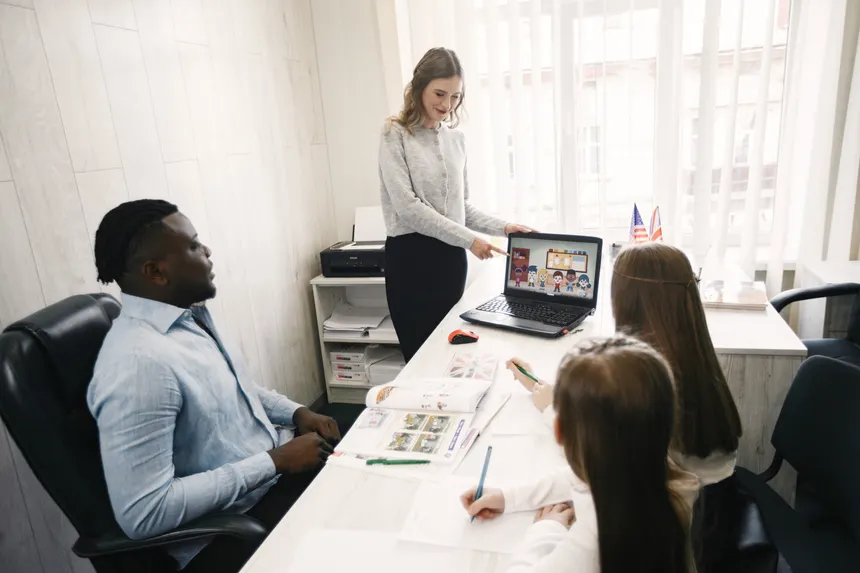
Pro Tip: Don’t wait for the next formal observation. Invite a colleague into your room, or just swap ideas. Honest, informal feedback is the fastest way to really improve.
Above all else, remember: teaching’s a job where you never really stop learning. Every observation, every bit of feedback, every conversation with a colleague is a chance to tweak your practice and - at the end of the day - make a bigger difference for your learners.
What will you do with your next opportunity?