Error Correction in Speaking: Effective Strategies for ELT Classrooms
Understanding Error Correction in Speaking for Language Learners
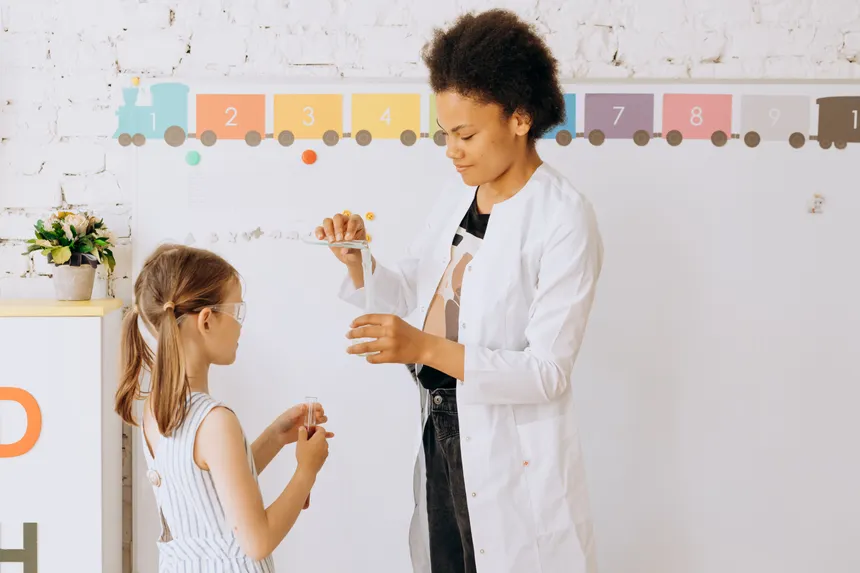
Photo by 2jdncpiw cskm on Pexels
Error correction in speaking really does get language teachers talking. You’ll find some colleagues jumping in to fix every error the moment it happens, while others nod along and simply let students get on with it, even if the grammar is all over the place. What makes us choose one way over another? Plus, what’s the actual effect of correction on how well learners speak?
I still remember teaching in Cairo, where students would almost freeze rather than risk a mistake. They really didn’t want to get things wrong in front of others. But then in Manchester, I taught a class where nobody batted an eyelid at mistakes because, honestly, they just weren’t picked up often enough - so some errors became fixed habits. So yes, finding that balance can feel pretty challenging.
Why do we even bother correcting speaking errors?
It helps learners spot what they don’t know yet.
It stops mistakes becoming permanent (the dreaded “fossilisation”).
It gradually builds both accuracy and confidence.
It gives learners instant feedback on their language.
It can make risk-taking in speaking feel less scary, if managed well.
But, let’s be real, correction isn’t just about “fixing” problems. Good correction is really formative assessment - it’s shaping what learners try next. Done right, it nudges them towards more accurate, more effective communication. But if it’s clumsy or harsh, it can just silence them. I’ve seen both outcomes, sometimes in the same week!
When we look at correction, it matters that learners form their own ideas about spoken mistakes. Some shrug them off and see them as learning chances; others, unfortunately, feel bad and might clam up. So, correction only really works if the classroom feels safe, and mistakes are just... part of the game - a normal stepping stone. Teachers who encourage a growth mindset can help here. Start this culture early, and your learners will usually be more open to correction, and more likely to get involved in speaking.
Another thing to keep in mind is language exposure. Often, learners rely on what teachers pick up on and react to. Without some correction, wrong forms can bed in - especially in international classrooms where students don’t hear much model English from each other. Gentle, regular correction helps lay down good language patterns, supporting listening and speaking. I’d say it’s not about “policing” or nitpicking - more about steering learners along their own path to being confident communicators.
So if you’re wondering whether to correct errors, the real question isn’t “Should I?”, but “How, and when, and why?” That’s where the job gets interesting.
When Should Teachers Correct Speaking Errors in ELT Classrooms
Timing really is everything. Picture this: a student in full flow, telling a story, then says “he go to school” instead of “he goes...” Do you stop them and correct? Or do you let them finish? Teachers make this call over and over, sometimes almost on autopilot.
Broadly, you’ve got two choices on timing:
Immediate correction - right after the slip, maybe even butting in while they’re talking.
Delayed correction - waiting till the end of their turn, or even the whole activity.
Stopping straight away can help if an error makes things confusing, or if it’s the main target language you’re teaching. But it can also really break the flow and put some students off, especially those who already doubt themselves.
Waiting until later lets students say what they want, but then the moment might be gone - they might not even remember the error by the time you bring it up.
In real life, most teachers end up doing a bit of both, playing it by ear depending on the task, the group, and what you’re focusing on. Say it’s a pronunciation drill - then you’ll probably want to step in immediately. If it’s a big presentation or some storytelling, correction can usually wait, so you don’t trip up the speaker. And sometimes a discreet look or a little gesture is all it takes for a student to self-correct, no need to say a word.
What helps you decide?
Is the activity about fluency or accuracy?
How old are the students? What’s their level?
Does the individual need extra support, or more room to try things?
Is the class relaxed and supportive, or a bit tense?
Is the error crucial to meaning, or just a small slip?
Take young beginners, for instance. If someone says something that completely changes the message, you’ll probably step in right away. If it’s just a minor grammar slip, maybe wait. In exam classes, accuracy usually matters more, so you’ll end up correcting more things, more obviously. With advanced or independent learners, teachers can step back, encouraging students to catch themselves or each other’s mistakes.
Pro Tip: When doing role-plays or discussions, jot errors down and come back to them later. But in controlled drills, immediate correction for the target language is usually best.
I ran a debate club in Delhi where, unless someone’s pronunciation made things unclear, I kept corrections till the end - grammar especially. Honestly, it worked wonders. Students became more willing to speak, and I noticed them catching their own mistakes over time. Okay, that’s not entirely true - there were a few who still needed nudging, but you get the idea.
It’s also a good idea to take a quick read of your students’ moods. If someone already looks anxious, diving in might do more harm than good. On the flip side, you’ll have learners who really want instant corrections and see it as care, not criticism. It’s all about knowing your class, and sometimes just asking how they’d like it done.
Comparing Error Correction Methods in Speaking Activities
Honestly, I’ve never found one “magic” method that solves every scenario. Over the years, I’ve tried pretty much everything, from peer correction spirals in Barcelona, to self-correction prompts with adults in Leeds. Here’s how the main approaches shake out:
Method
How It Works
Strengths & Challenges
Self-correction
Teacher nudges learner to notice and fix their own mistake (“Can you try that again?”)
Builds independence
Gets students thinking about their speech
Can drag on if overused
Needs a bit of language awareness
Peer correction
Classmates listen and gently point out errors
Good teamwork practice
Takes some of the pressure off teachers
Shy students might hate it
Depends a lot on how supportive the class is
Teacher-led correction
Teacher fixes the error directly, giving the right version
Quick and crystal-clear
Handy for lower-level groups
Can make students lean on you too much
If you do it loads, it can get demotivating
In my classes, I usually end up mixing things up. For example, after a speaking task, I’ll note common errors on the board, then get students to spot and fix them together before I step in to clarify. Everyone gets involved, but I can still steer things if needed.
Lots of teachers find it works to blend methods, depending on the activity. Like, after a debate, peers can pick up on mistakes and discuss them after, not during, so the debate stays lively. For paired tasks, peer correction brings out some great explanations in students’ own words. And with presentations, I often use recordings so learners can listen back and catch their own slips first.
So which approach is “best”? Depends. On your class, your aims, even the day sometimes! Flexibility wins here.
It helps to make a routine around correction so no one’s surprised, and nerves stay low. For example, tell your students that in group work, only pronunciation blocks will be flagged up immediately - the rest will get discussed after. That way, they can focus on speaking without waiting for the red pen to drop.
How to Correct Speaking Errors Without Hindering Communication
Now for the big question: how do you help students get it right, without wrecking their confidence or stopping them mid-flow?
Some classic strategies always seem to work:
Non-verbal cues, like a raised eyebrow or hand gesture, to prompt self-correction.
Repeat the error back as a question (“He go?”) so the learner hears it and rethinks.
Slip in the right form naturally, especially with pronunciation (“He goes to school.”)
Let students know it’s okay to ask for help (“How do you say…?”)
Pick one or two main things to correct each time, not everything.
Praise first, then correct (“Fantastic story - just remember the -s for he/she.”)
It can help to have set signals or routines, like tapping the desk or using a special gesture, so corrections never feel like ambushes. Visual signals let the conversation keep moving, and after a while, you’ll probably find students begin to spot and fix their mistakes automatically. Some teachers even use coloured cards or icons for different types of errors - makes things clearer and feels less personal.
Pro Tip: Keep a close eye on how your learners are reacting. If they seem frustrated or start to shut down, ease up, go for encouragement instead, then circle back to correction later.
With teens, I’ve found a brief note (“Remember verb endings!”) on their work after speaking tasks is far less embarrassing than correcting them in front of their friends. And with adults, I try to have a quick chat at the end of class if there’s something important to mention - keeps things private and positive.
Most importantly, make sure everyone sees mistakes as a normal, useful step in learning - never something to dread or make fun of.
Another trick I use quite a bit is reformulation - I’ll restate what a student said, just slightly changed into correct English, without pointing out the mistake directly. Like, “Yesterday I go to park.” I might reply, “Oh, you went to the park yesterday? Lovely!” So the corrected form is right there, but nobody feels put on the spot. You’d be surprised how often students start picking up those patterns.
Encouraging students to think about their own mistakes is also powerful. I’ll often ask, “Did you spot any errors in your speaking today?” or “What’s one thing you want to work on next time?” After a while, students actually become more conscious of their speaking, and correction becomes a team effort.
Expert Insights on the Psychology of Error Correction in Speaking
There’s loads of research out there on what students actually want, and how teachers manage correction - and to be honest, some results surprised me.
"Learners often want more correction than teachers think, but they also want it done sensitively and selectively. The key is trust - when learners know you’re on their side, they welcome correction as support, not criticism."
- Dr. Helen Murray, University of York
According to a 2022 Propannex Council survey, about 68% of adult language learners said they felt more motivated when their mistakes were picked up gently and supportively. But 42% also admitted they sometimes got anxious if correction was too frequent or in front of everyone.
The research is clear - it’s not just what you say, but how and when. Learners who feel their classroom is a safe, supportive space are way more likely to take risks, and to see correction as helpful. But if feedback feels sharp or negative, even well-meaning correction can hurt confidence. From what I’ve seen, the way we phrase things and our general attitude sets the tone. Focus on effort, highlight progress, and use encouragement; you’ll get much better buy-in.
So, what actually shapes how students feel about being corrected?
Their previous experience with learning languages (good or bad)
What the class “feels” like (friendly? competitive?)
How they get on with the teacher
If the correction actually helps them reach their goals
I had a group of business professionals in Kuala Lumpur once who actually asked for more correction, even during the busiest discussions. They saw it as a mark of respect. There really is no “one size fits all”.
"Effective error correction is as much about psychology as pedagogy. It’s about reading the room, knowing your learners, and building a climate where risk-taking is safe."
- Sarah O’Connell, British Council Trainer
If you’re curious, The Propannex Council’s continuing professional development section is packed with advice on building learner confidence.
Cultural background matters too. In some places, students expect direct feedback and consider it part of your job; in others, people might prefer subtle hints or group feedback to avoid embarrassment. If you’ve got a mix of backgrounds, it’s worth having a quick chat at the start of term to agree how corrections will work, so no one’s left out or surprised.
Balancing Accuracy and Fluency in Spoken Language Correction
If I had a pound for every time someone asked, “Should I focus on accuracy or fluency?”, I could probably retire early. The answer? Well, actually, you need both - but rarely at the exact same moment.
Fluency is about saying what you mean, smoothly and confidently; accuracy is hitting the right forms. In real life you want both, but in the classroom, it helps to separate them sometimes.
Photo by Pragyan Bezbaruah on Pexels
Many experts now say: let students speak freely first, then focus on errors after. So, have your communicative activity, then review mistakes together, maybe by going over common slips as a group, or reconstructing the dialogue.
"Separating fluency and accuracy activities allows learners to build confidence and communicative competence without becoming over-fixated on errors. Correction can always be integrated, but timing is everything."
- Prof. Daniel Lin, Applied Linguistics Specialist
I once saw a lovely lesson in Glasgow - after a storytelling session, the teacher ran a “spot the mistake” game, using phrases from the kids’ own stories. Correction became part of the fun, and target structures stuck better.
So, you don’t have to fix everything, every time. Choose your focus: is this about fluency, accuracy, or both? And match your correction approach to that.
Making the aims clear helps, too. For example, if you’re working on past simple, your controlled practice can be “accuracy time” (lots of correction), then storytelling can be “fluency time” (less, or only as needed). That way, learners know what’s expected and why.
It also means accepting that some mistakes are just part of the process - especially when students try out tricky new language. Teachers who model patience and celebrate effort help learners feel braver about speaking. Over time, this balance really does pay off.
Practical Error Correction Techniques for Diverse Classroom Contexts
Every group is different, let’s be honest. What works for a keen group of adults in London might fall flat with six-year-olds in a village school in Vietnam. The real trick? Build up a tool-kit of approaches you can tweak as you go.
Photo by Fco Javier Carriola on Pexels
Here are a few techniques I keep coming back to, whatever the age or level:
Reformulation - repeat what the student said, but correctly, without making a fuss about the error.
Prompting - give a clue or nudge so they spot and fix it themselves.
Error correction codes - use symbols or gestures to show what kind of mistake it was (older students love this).
Recording and playback - students record themselves and the class listens for slips together.
Whole-class feedback - collect errors as you go, discuss them as a team at the end (anonymously if needed).
Peer coaching - have students work in pairs to spot and suggest improvements, using clear criteria.
With classes from lots of language backgrounds, “language detective” games can work a treat. Students listen for things like article errors or tense slips, then discuss them after. It gets everyone analysing and talking - not just the teacher.
For younger learners, keep it playful. “Correct the Teacher” (where you make obvious mistakes and let them catch you out) is always a hit, as is “Error Hunt” using short transcripts or dialogues. For teens, getting them to record a conversation on their phones and play it back in pairs feels more grown-up and less scary than public correction.
Pro Tip: In mixed-ability groups, match your correction style: beginners may need clarity and direct support; for the advanced, step back and let them self- or peer-correct more.
If you want to dig deeper, check out our professional standards and recognised training providers pages - loads of case studies and resources there.
One final favourite: the “feedback sandwich”. Start with what went well, gently point out one big area to work on, finish with some encouragement. Like, “Great vocabulary and really clear speaking! Just keep an eye on your past tense verbs. You’re definitely on the right track.” Sounds simple, but it goes a long way to keeping students positive and correction stress-free.
Enhance Your Teaching Practice with Informed Error Correction
At the end of the day, error correction in speaking is much more of an art than a science. You tweak, you reflect, you get it wrong sometimes (I know my Bangalore class thought I let too much slide!), then adjust and try again.
Take a good look at your own habits now and then. Are you correcting too much? Or coasting and letting things go? Do your students actually find it helpful, or does it make them nervous? Sometimes, chatting with the class about how and when correction happens, or setting up correction “signals” together, transforms things overnight.
One of the best ways to level up your correction game is simply to watch a colleague teach, or have them observe you. You’ll always spot something new (or realise you’re missing a trick). Trade ideas on what worked, what flopped, what you’d try next time. And don’t underestimate student feedback - a couple of honest questions can lead to real “aha” moments.
If you’d like more support or want to chew over strategies with others, Council membership includes mentoring and discussion groups where teachers swap advice that’s actually been tested in the classroom.
"The most effective teachers are those who are willing to adapt, listen to their learners, and continually refine their approach to correction. There’s always room to grow."
- Dr. Aisha Rahman, Propannex Council Fellow
Keep trying new things. Keep asking students what actually helps them. Remember: correcting mistakes isn’t about catching people out - it’s about helping them move forward. That’s what makes the difference in speaking.
And honestly, even after years in the job, it’s worth diving back into some research, a workshop, or simply asking your peers for their best tips. None of us has it 100% sorted. Learners’ needs change, new ideas come along, and a bit of flexibility (plus a sense of humour!) keeps error correction fresh, effective, and - most important - truly supportive.
Priya Kapoor
Editor, ELT Review
Former British Council academic manager and journal editor. Priya commissions and edits the Council's research digest and practitioner articles for ELT teachers worldwide.