
Error Correction in Speaking: Best Timing and Effective Techniques
Understanding Spoken Error Correction in ELT
- Help learners spot and understand their mistakes
- Make room for trying out new language (even when it’s a bit wobbly)
- Create an atmosphere where mistakes are stepping stones, not signs of failure
- Support both fluency and accuracy, not just one or the other
Timing Matters: When to Correct Speaking Errors
Timing changes everything, doesn’t it? The decision to correct straight away or to hold back a bit can make a surprising difference - sometimes bigger than you think - to both fluency and how comfortable learners feel. There’s no simple answer, but understanding the options is key. Immediate correction means you stop things there and then to address the mistake. I’d reach for this when:- The main goal is accuracy, like in a tightly focused grammar practice
- The mistake is getting in the way of understanding, so people can’t keep talking
- You know your learner won’t crumble if you interrupt to nudge them back on track
| Timing | Advantages | Challenges |
|---|---|---|
| Immediate Correction |
|
|
| Delayed Correction |
|
|
How to Correct: Techniques for Effective Error Correction
Once you’ve decided on the timing, the big question is how. Over the years, I’ve seen too many teachers just say, “No, that’s wrong,” but honestly, there are so many better, more gentle ways to go about it. Here are some tried-and-tested techniques - each has its own moment:- Recasts: Rephrasing what the learner said, but with the correct form. No drama, just slipping the right version naturally into the conversation. For example, your student says, “She go to market,” and you reply, “Right, she goes to the market every Saturday, doesn’t she?” Learners pick up more than you’d think this way.
- Elicitation: Give a little prompt so the learner fixes the slip themselves. Maybe just repeat the incorrect bit with a questioning tone: “He go to school every day?” Sometimes that’s all you need.
- Clarification Requests: Ask the student to explain what they meant. Something like, “Sorry, did you mean ‘He goes’?” It gives them a nudge to rethink things.
- Explicit Correction: Simply state the right answer: “We say ‘He goes’, not ‘He go’.” Use this carefully, as it can feel abrupt if you overdo it. Sometimes it’s needed, though, especially with exam groups.
Pro Tip: Keep a running log of common errors you hear in class. Use it for quick revision games or mini-lessons. Honestly, making correction a routine part of your lessons takes the sting out of it.
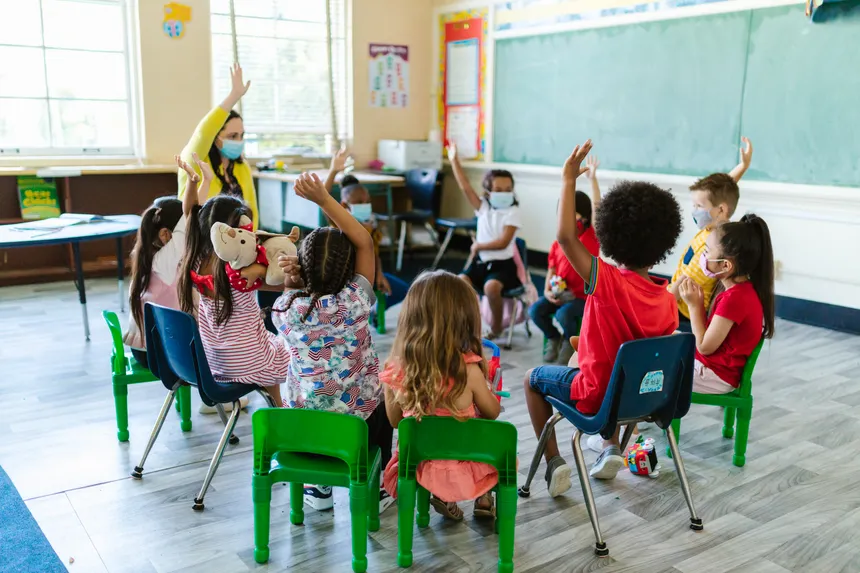
Let’s not ignore the classroom set-up either. Sitting in a circle seems to make peer correction much more natural - everyone can see each other. Lines of desks can make people a bit shy.
- Find out how your learners feel about different correction styles
- Show them how to self-correct - do it yourself first
- Mix up feedback: some individual, some group
- Make sure error correction is always tied to real communication, not just grammar for grammar’s sake
Balancing Correction and Communication in the Classroom
Here’s the challenge: get correction wrong and you end up with silent, nervous classes, where nobody wants to speak for fear of mistakes. I’ve seen this often enough (probably more times than I care to admit). During my CELTA in Glasgow, I watched a great mentor make it look easy. She let students talk freely in discussions, quietly noting any errors. Afterwards, she’d write a few on the board and get everyone to work together to fix them. No embarrassment, and the conversation never really stopped for correction.So how do you do both - help students talk and get better at the language? Build correction routines into your lesson plan. You could try having a “feedback slot” straight after a speaking task. Or let students check with a partner before opening things up to the whole class. And, honestly, clearing up your approach right at the beginning of the course does wonders: if students know what’s coming, they tend to relax and join in more."Effective error correction is about timing, tact, and trust. If learners feel safe, they're far more willing to take the risks that lead to real progress."
- Dr Sarah Williams, Senior Lecturer in TESOL
Pro Tip: Set up a quiet correction signal in class. A little hand gesture or sign for “want to try that again?” makes things less awkward. That way, learners can get involved in the correction when they’re ready.
Just remember - your job isn’t just to correct; it’s to create space for real communication. That’s real progress.
Learner Reactions: Fostering a Positive Error Correction Culture
How students respond to correction? Honestly, it’s all over the place. Some actively want it and see it as a positive step. Others dread it. Most fall somewhere in between, sometimes shifting depending on the day. One group of business professionals I taught in Manchester come to mind. At first, they were terrified of peer correction - nobody wanted to look foolish in front of their colleagues. I started sharing some of my own language mistakes (there are plenty!), and slowly, sharing errors became less of a big deal. By the end, they were actually asking each other for feedback - a huge turnaround. Here are a few simple ways to grow a positive correction culture:- Treat mistakes as normal. Share your own language learning goofs - it really helps
- Push self-correction: ask things like, “Is there another way you might say that?”
- Keep peer feedback constructive and supportive, not critical
- Use anonymous examples when showing common errors
- Celebrate effort, improvement, and progress - not just getting everything “right”
When you create a classroom where errors are just part of the process, not a disaster, you’ll notice learners becoming bolder and more resilient. Bit by bit, they take more risks and, let’s be real, that’s where the best learning happens."Anxiety is the enemy of language learning. Teachers who make correction feel safe and collaborative give their students the freedom to speak and grow."
- Prof. Ana Rodríguez, Universidad de Granada

Comparing Error Correction Approaches Across Contexts
Teachers don’t all approach spoken errors the same way - far from it, actually. Context makes a huge difference, and it goes way beyond someone’s personality. Local teaching traditions, school rules, and sometimes cultural attitudes have a big say in how errors get handled. Take Japan. In many state schools, accuracy and test scores matter most, so correction tends to be very direct and frequent. But, if you visit a private language school, you’ll see more relaxed, communicative styles with softer feedback. Now, compare that to Spain. Peer correction and group work are often the default, and students don’t seem to flinch at public feedback. In the UK? Well, it really depends on the setting and, of course, what the learners hope to achieve. Here’s a quick summary:| Context | Correction Style | Typical Learner Response |
|---|---|---|
| Japanese Secondary School | Explicit, teacher-led correction | Hesitancy, focus on accuracy |
| Spanish Adult Academy | Peer and group correction, recasts | Active participation, higher tolerance for mistakes |
| UK University EAP Class | Delayed correction, self-correction encouraged | Reflective, independent learning |
Research Insights: What the Evidence Says About Error Correction
So what does the research actually show about error correction in speaking? It’s a hot topic - honestly, academics have argued about it for years - and the results are rarely black and white. Big studies point to targeted correction making a real difference over time, especially when it’s consistent and links back to meaningful communication. Lyster and Ranta (1997), for example, found that recasts and elicitation are especially powerful for helping learners notice and really absorb new grammar. And if you’re a numbers person, a meta-analysis showed that over 60% of students who got regular corrective feedback made noticeable progress in grammar in just three months. But, and here’s where experience matches research, too much correction (especially during fluency tasks) can actually slow students down and make them more nervous. Sheen (2011) found that if you’re correcting more than five times in a five-minute speaking slot, learners are much less likely to want to speak up. Not exactly what we’re after.Let’s not forget how students feel about it either. Study after study shows that being open about your approach makes learners way more willing to engage and much less likely to feel demotivated. Council surveys back this up too: 72% of teachers reported better participation when they explained their correction routine from day one. Just one more reason to chat with your class about how feedback will work. If you’re keen to dig deeper, the professional standards on The Propannex Council website include a hand-picked reading list."Corrective feedback is most beneficial when it is selective, focused, and situated within authentic communication. Blanket correction simply doesn’t work."
- Dr. Amanda Lee, Centre for Applied Linguistics
Elevate Your Classroom Practice with Informed Error Correction
Here’s the thing: spoken error correction isn’t something you can just tick off your to-do list. It’s alive. It needs to adapt, lesson by lesson, depending on your class. The teachers I admire most, whether in Leeds or Kyoto, treat correction as a conversation, not a set of fixed moves. If you want to sharpen your approach, here are a few pointers:- Step back and reflect on your feedback style: What’s working? Where are learners still stumbling?
- Try out different techniques, and ask your students what they think (I got my favourite elicitation trick from a teacher in Barcelona, actually)
- Team up with colleagues and swap ideas
- Stay updated: check out CPD opportunities or reach out to recognised training providers for workshops and forums
Pro Tip: Don’t be afraid to switch tactics halfway through a lesson if things feel flat or the class looks anxious. Sometimes just asking, “How are you finding the feedback today?” can turn things around.
And don’t forget - The Propannex Council is there to support strong, research-driven practice. Keeping things focused on your learners - their needs, their voices, their progress - is what turns a correction routine into a real force for good in your class. Isn't that the goal?
If you want to connect with others who care about high standards, take a look at Council membership. Together, we can keep moving language teaching forward - one discussion, one lesson, one correction at a time.